
Description
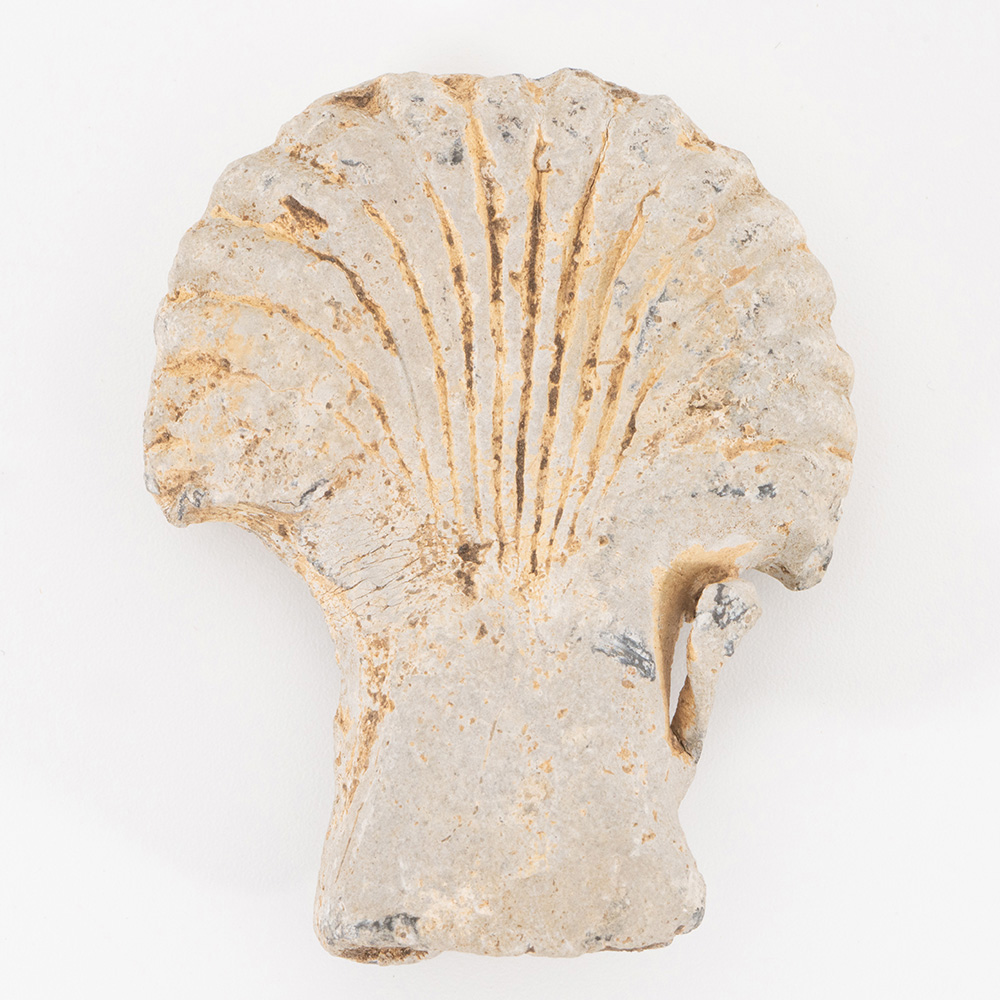
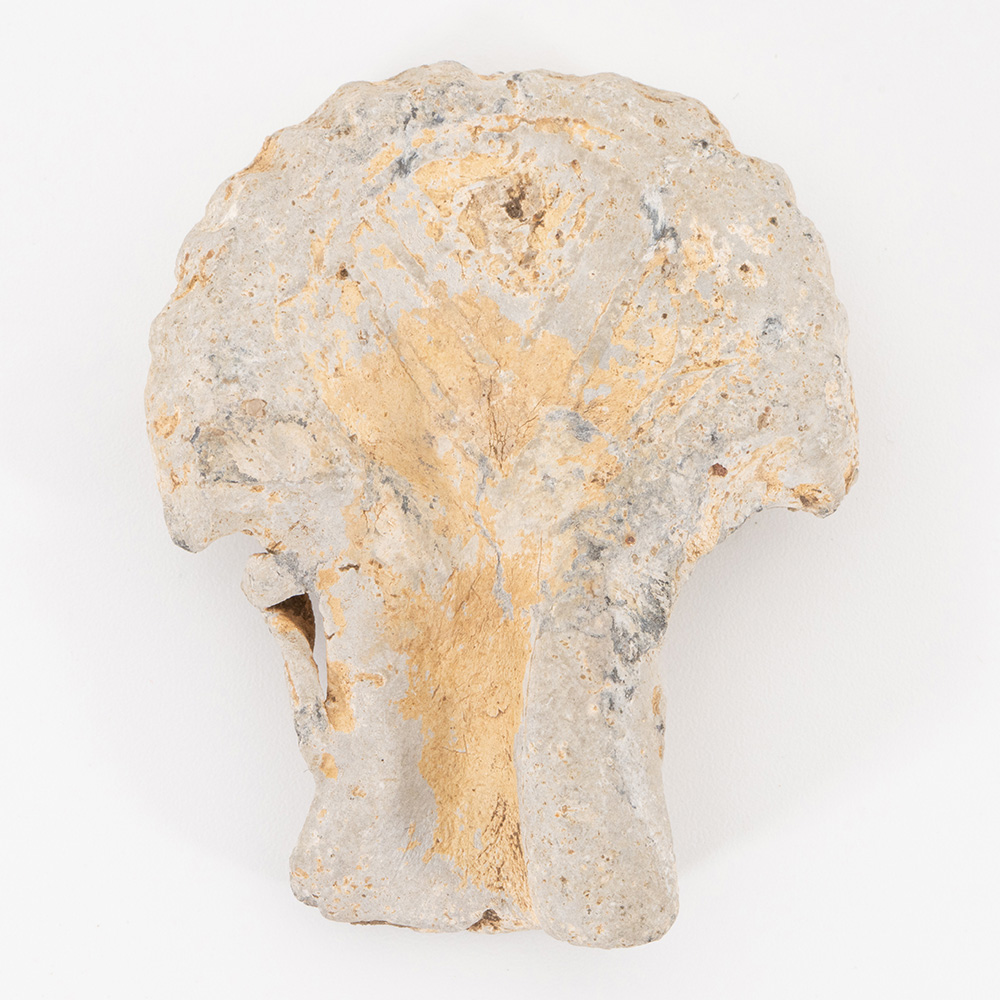
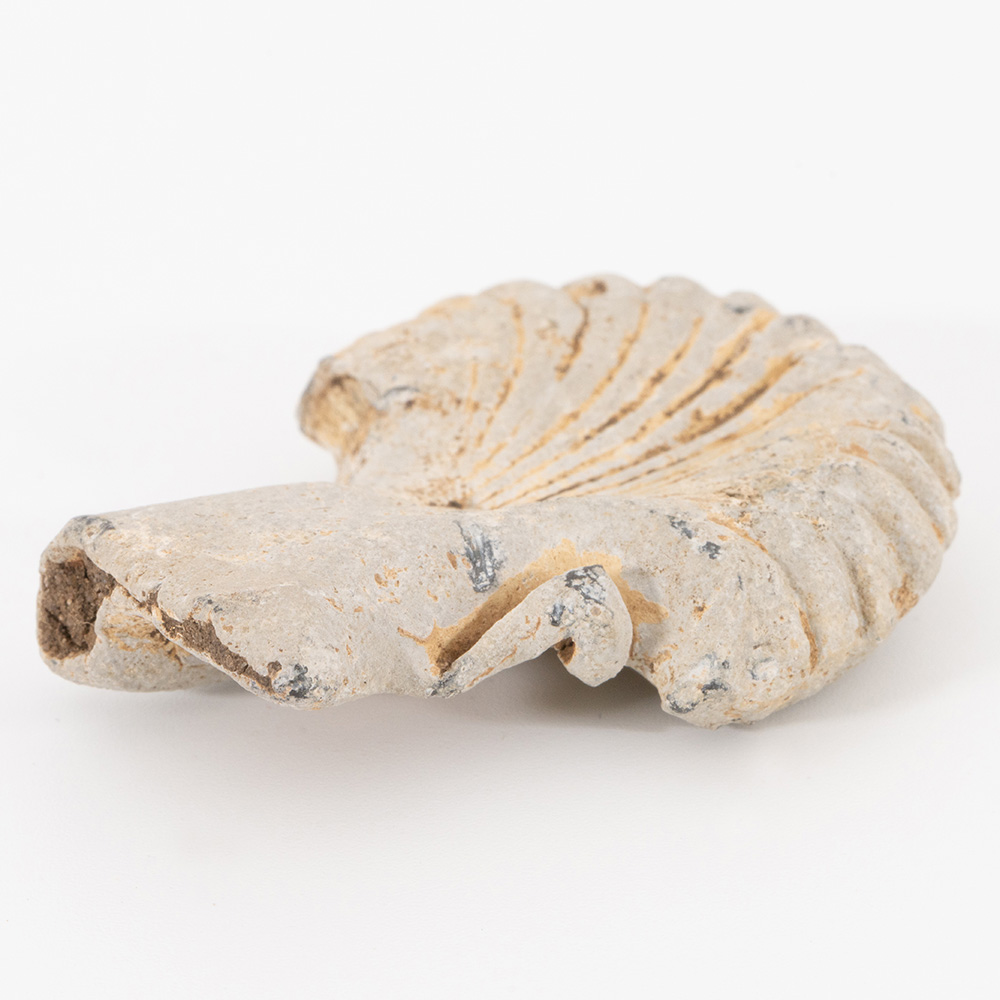
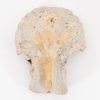
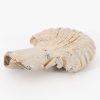
Heading: Medieval Pilgrim’s Ampulla 15th century
Material: Lead alloy
Period: Medieval
Date: 14th-15th century
Origin: Possibly Walsingham shrine
Condition: Main body of flask is in good preservation, fitment loops bent or broken.
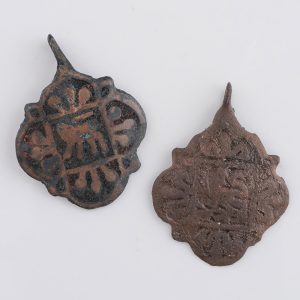
Description: A metal scallop-shaped hollow flask made of lead or pewter (probably lead alloy due to patina), reverse with scallop shell markings, the obverse with chevrons and scallop edge, two lugs to either side (one missing the other broken).
Size and Weight: 47mm, 53g
References: Mills, Medieval Artefacts. p39; Mitchiner p.138-152
Features and Provenance: Ex Essex Coins sale.
The popularity of pilgrim souvenirs began with the death of Thomas Becket at Canterbury in 1170. The belief that the ability of his blood, or, ‘The water of Saint Thomas,’ to heal was quickly taken advantage of by the church and portable containers were needed to sell this wonderful relic. This was copied by other shrines and along with badges, they became the must have to relieve ailments.
One such shrine in Norfolk, Our Lady in Walsingham, produced the scallop-shell flask, and, like many others, had motifs or lettering on the front to honour a saint, shrine or benefactor. It is unsure what the lettering stood for and in some cases, being produced by illiterate staff and is considered pseudo-lettering. The contents of the ampullae was used to aid the sick or even poured onto the fields to bless the harvest and increase yields; they could even be buried to perpetuate this, much to the delight of modern-day metal detectorists.
Condition Summary. This varies with the age of the artefact and there are grades between
Extremely Fine (EF). Very slight traces of wear. all parts of pattern etc present, visible and clear
Very Fine (VF). Some signs of wear on the higher parts of the relief, all parts of pattern etc present, but may be worn
Fine (F). Wear on the artefact and parts of item and pattern etc may be missing or not visible
Reviews
There are no reviews yet.