




Description
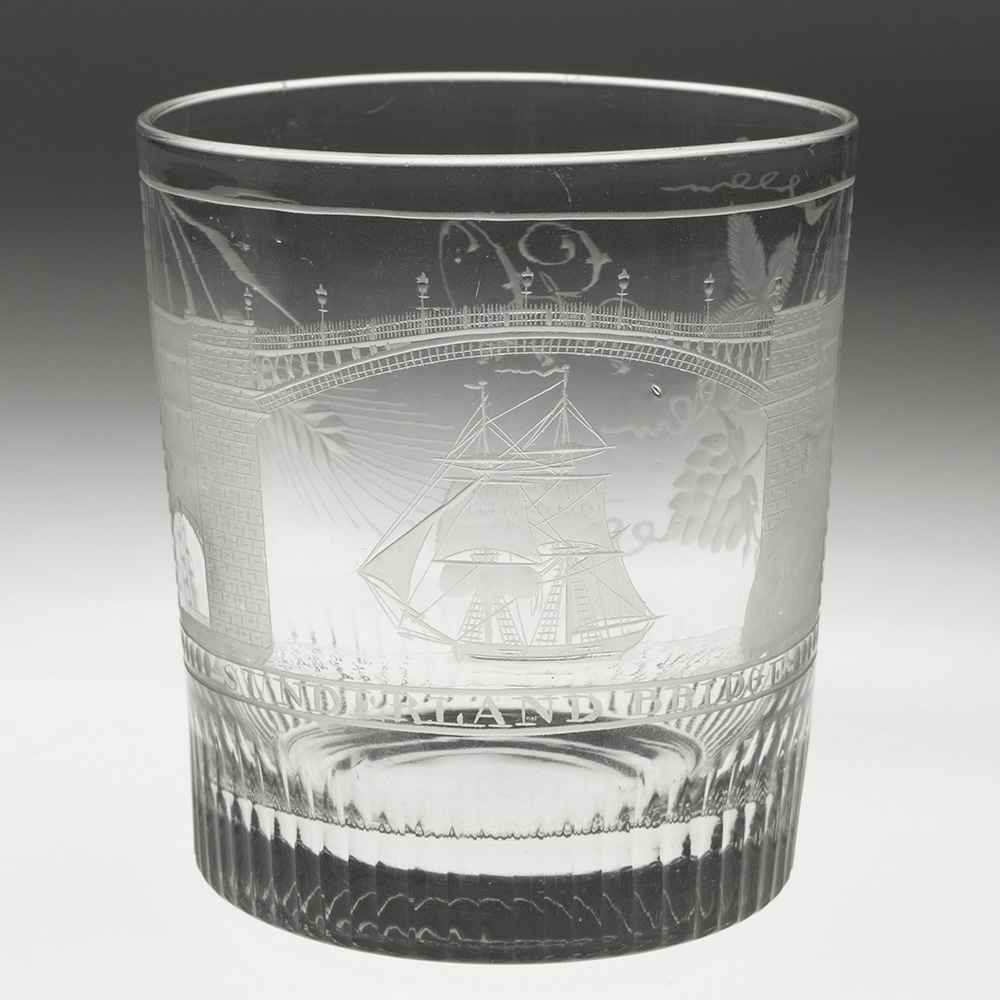
Heading : 19th century Sunderland Bridge tumbler c1830
Period : William IV–Victoria
Origin : England
Colour : Clear
Bowl : A bucket bowl engraved monogram “G.O.” set between and ear of barley and a hop cone with leaves and tendrils. A two-masted ship sailing below the Sunderland Bridge; Fine fluted cuts around the bottom one inch of the bowl. which has a solid base
Pontil : Polished
Glass Type : Lead
Size : 10.4cm tall with a 9.2 cm bowl and a 7.8cm base
Condition : Excellent. no chips or cracks. clean and clear; minimal wear and slight mossing to the base
Restoration : None
Weight : 343 grams
Additional Information:
The vast majority of glasses depicting the Sunderland Bridge are rummers. Rarely does one come across either a Tumbler or Tankard with these engravings. This is a rare example of the former. and one of the few we have had.
The 1796 Sunderland Road Bridge. as it should be properly known. was considered to be a major engineering achievement of its day. It had to overcome two significant factors in its construction – the precipitous nature of the banks of the River Wear at the chosen location. and the fact that the gorge was some 85 yards wide. It also had to be constructed as a single span so as not to impede the tall-masted ships which would pass under it. laden with coal from up-river.
Some 50.000 people attended the opening of the bridge on 9th August 1796. an opportunity for the production of commemorative wares by enterprising glass makers. The bridge had a toll for both wagons and pedestrians. but in spite of this revenue stream the financier behind the project. MP for County Durham. Mr Rowland Burdon ran into financial difficulties. In 1815 a parliament-approved lottery awarded the winner a share of the toll revenues. which included ships and ferries that travelled beneath the bridge itself. The bridge was reconstructed by a certain Robert Stephenson and re-opened in 1859.
Also instrumental in the early design work for the bridge – particularly the adoption of the single-arched cast iron span construction – was one Thomas Paine. son of Lewes in Sussex. father of American independence having published The Rights Of Man and the inspiration behind a particularly fine ale much favoured the members of our backroom staff…
References : This engraving is more commonly found on Rummers. which are detailed in the following sources:
English. Scottish & Irish Table Glass – G. Bernard Hughes – Page 193 Figure 139.
Nineteenth Century British Glass – Hugh Wakefield – Plate 46B.
The Arthur Negus Guide To British Glass – John Brooks – Page 105 Plate 100 and Page 117 Plate 106.
Starting to Collect Antique Glass – John Sandon – Page 46.
Decanters and Glasses -Therle Hughes – Page 20 Plate 13.


Reviews
There are no reviews yet.