





Description
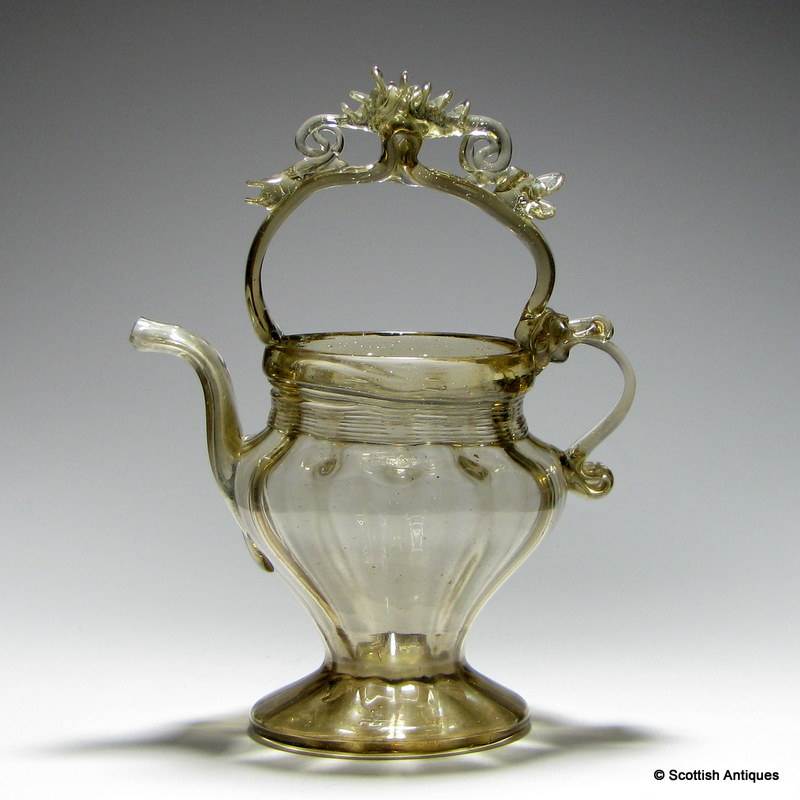
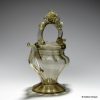
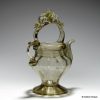
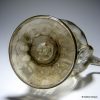
Heading : French cruche à eau bénite. mid 18th century
Date : c1750
Period : Louis XV
Origin : France
Colour : Clear with a pale amber hue
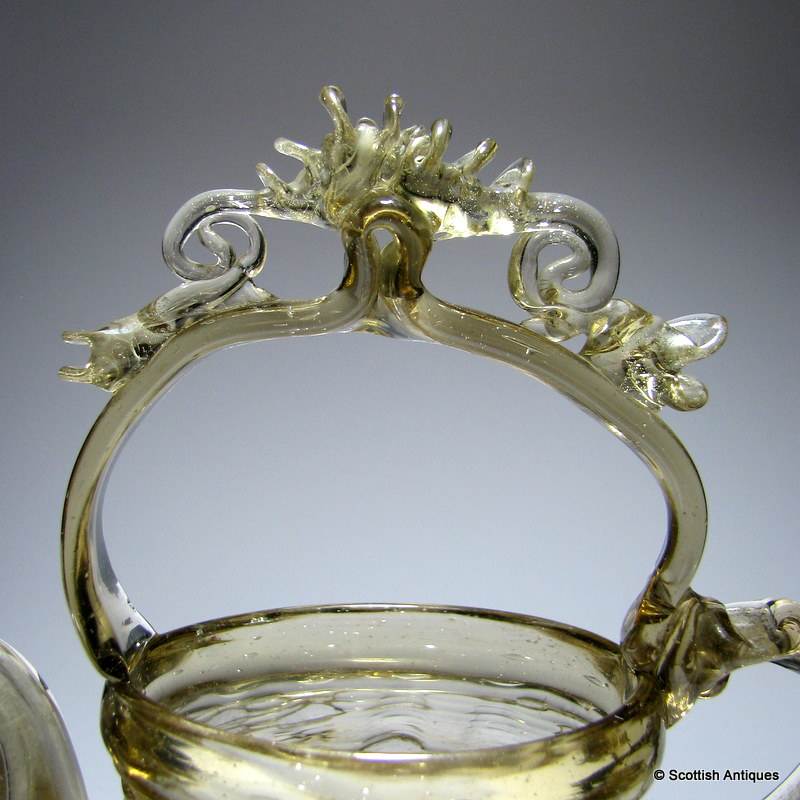
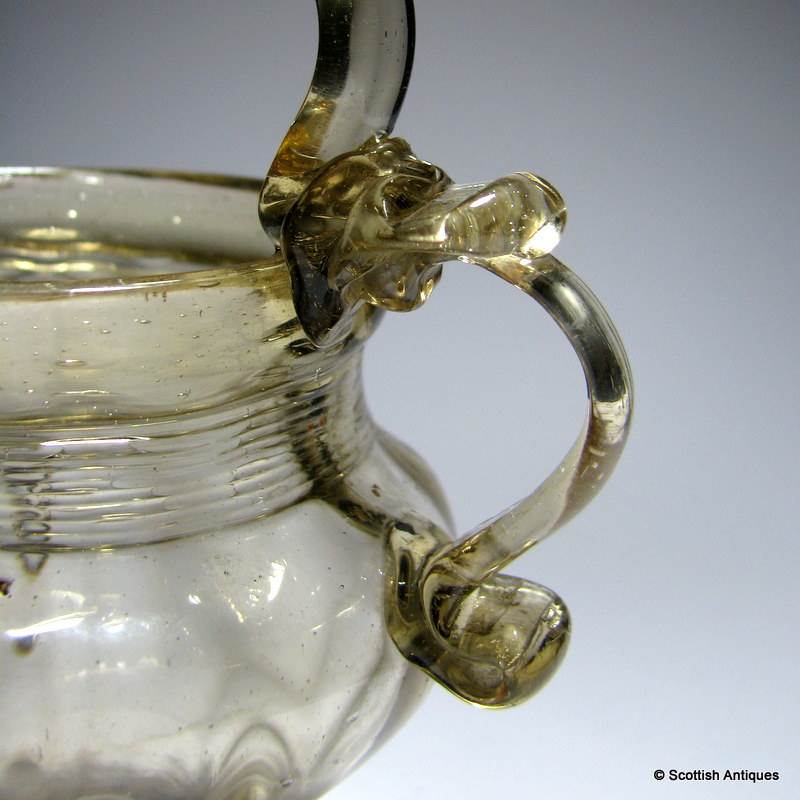
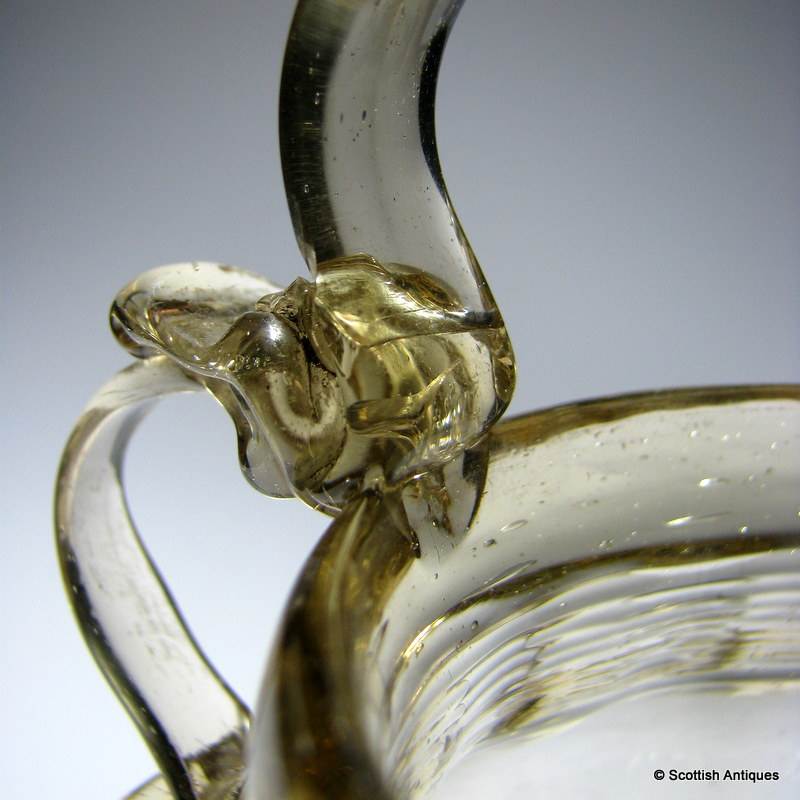
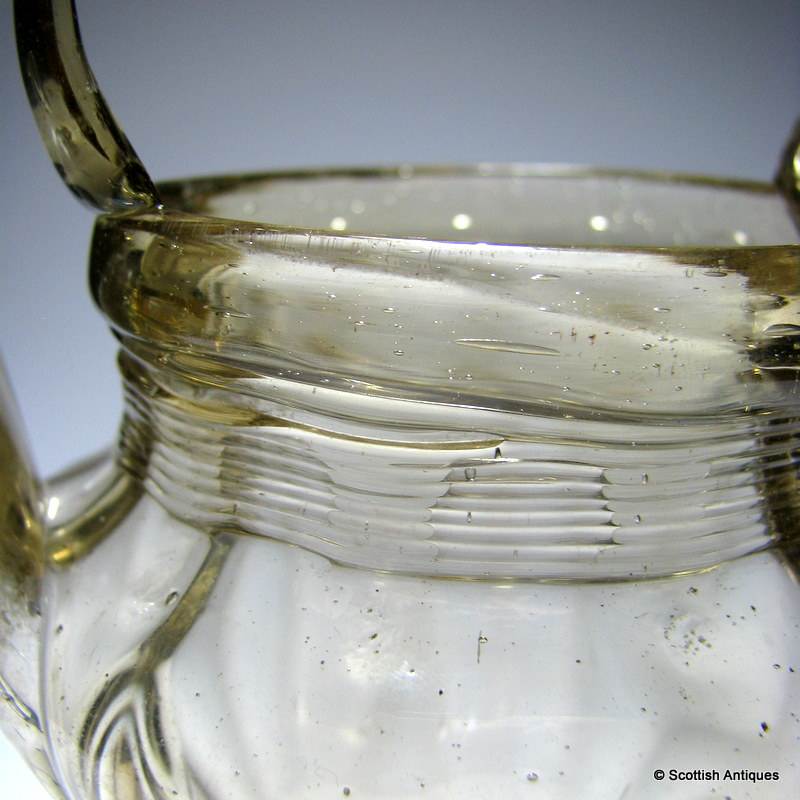
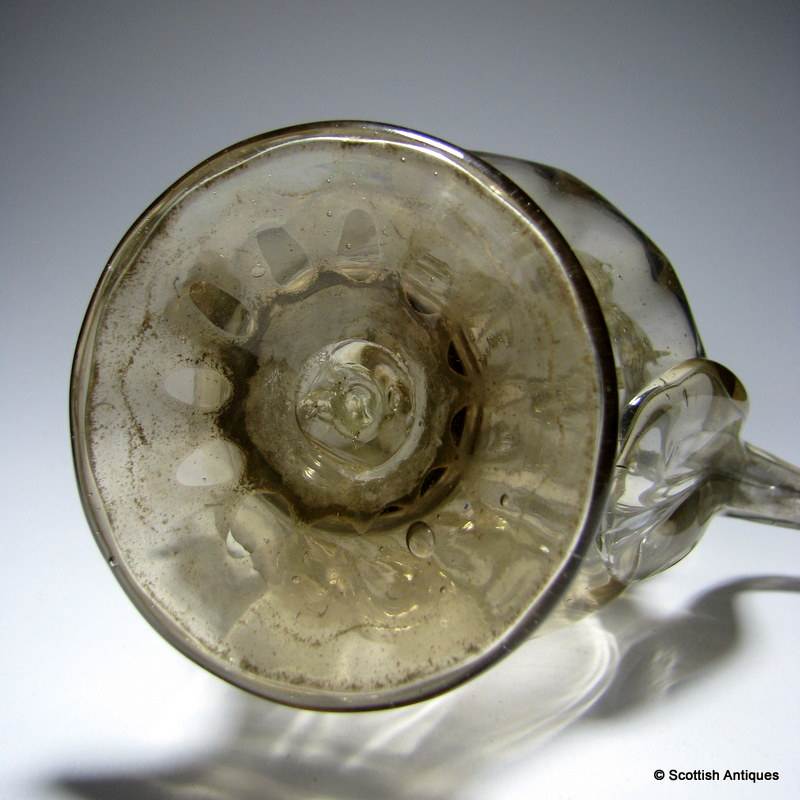
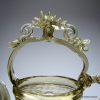
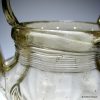
Bowl : Rib moulded double conical form with a fine spout. A coiled glass thread around the rim.Two applied handles. The upper handle attached to the rim has pincered decoration and two dolphins. There is a joint between the handle and the side handle. this is not a stress crack. it is simply the point at which the two components have been fused together.
Foot : Folded from the same blown glass bubble as the body.
Pontil : Snapped
Glass Type : Soda
Size : 17.3cm tall and 13cm from spout to handle
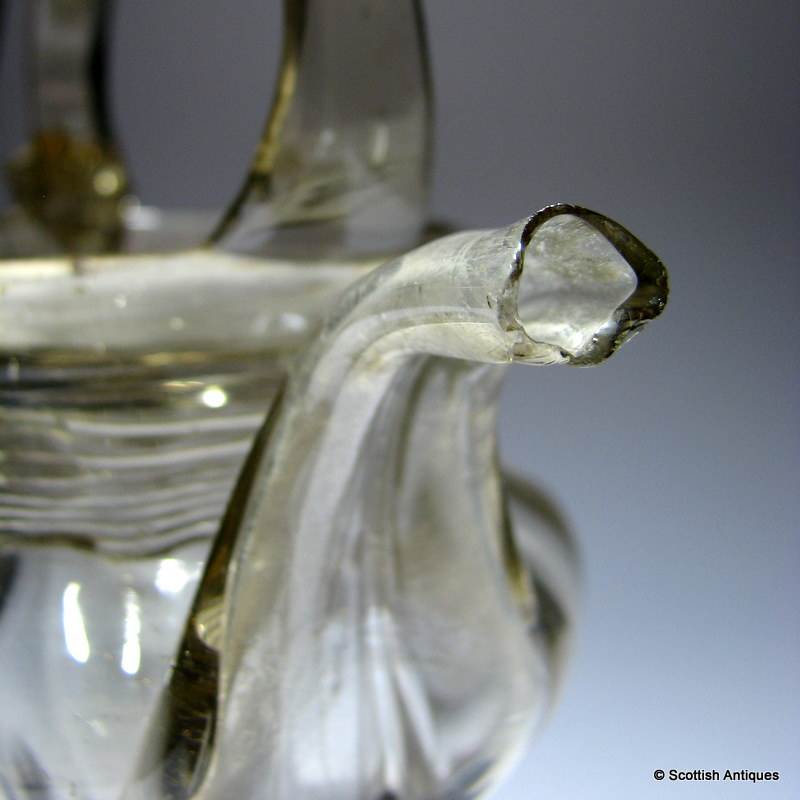
Condition : The tip of the delicate spout has a chip as shown. There is a joint between the upper
Restoration : None
Weight : 220 grams
We have seen similar examples in the Musée Crozatier in Le Puy-en-Velay in the Auvergne decorated with shells. doves and fishes. all religious symbols. The shells used to decorate these holy water ewers are always scallops. in French a cocquille St Jacque or St James’ shell. we know that scallop shells were carried by pilgrims in Britain and is used to represent St Augustine.
The dolphins in the case of the ewer also have religious symbolism. Without wishing to make this sound like the DaVinci code the dolphin has been used as a symbol of the resurrection. This is yet another example of pagan symbolism being adopted by the early Church. dolphins in ancient Greece were believed to carry the souls of the dead to the islands of the blessed.

Reviews
There are no reviews yet.