






Description
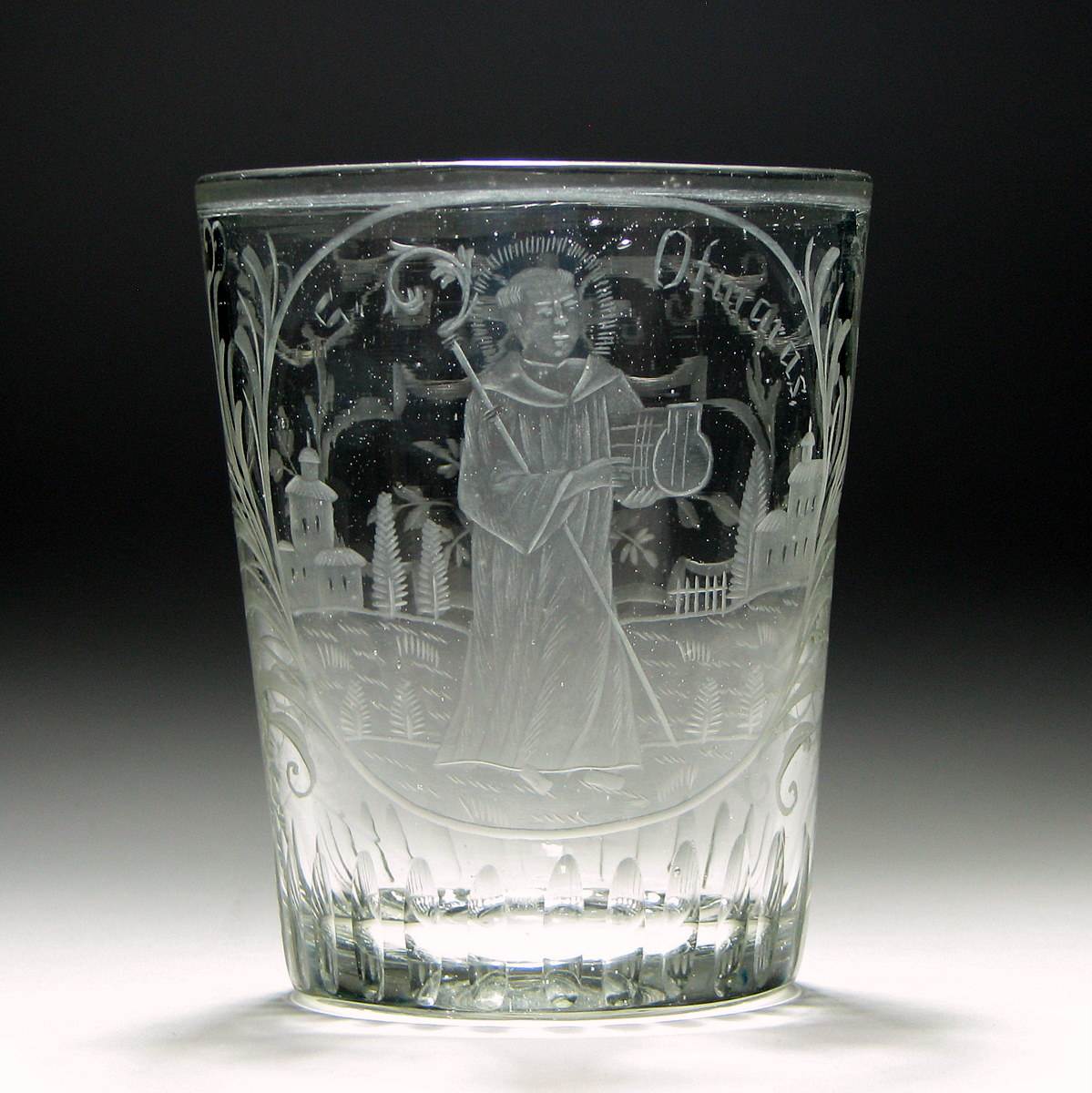
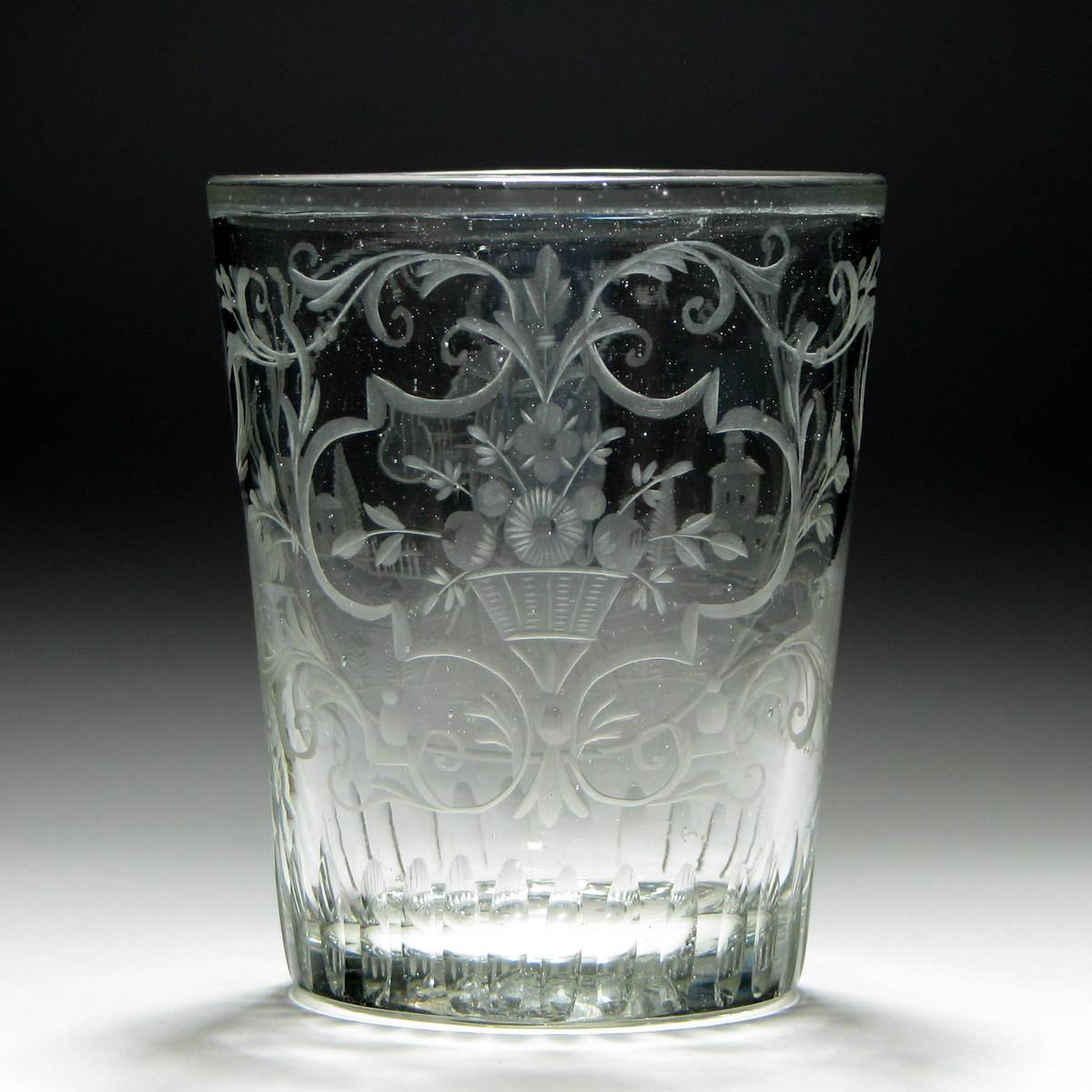
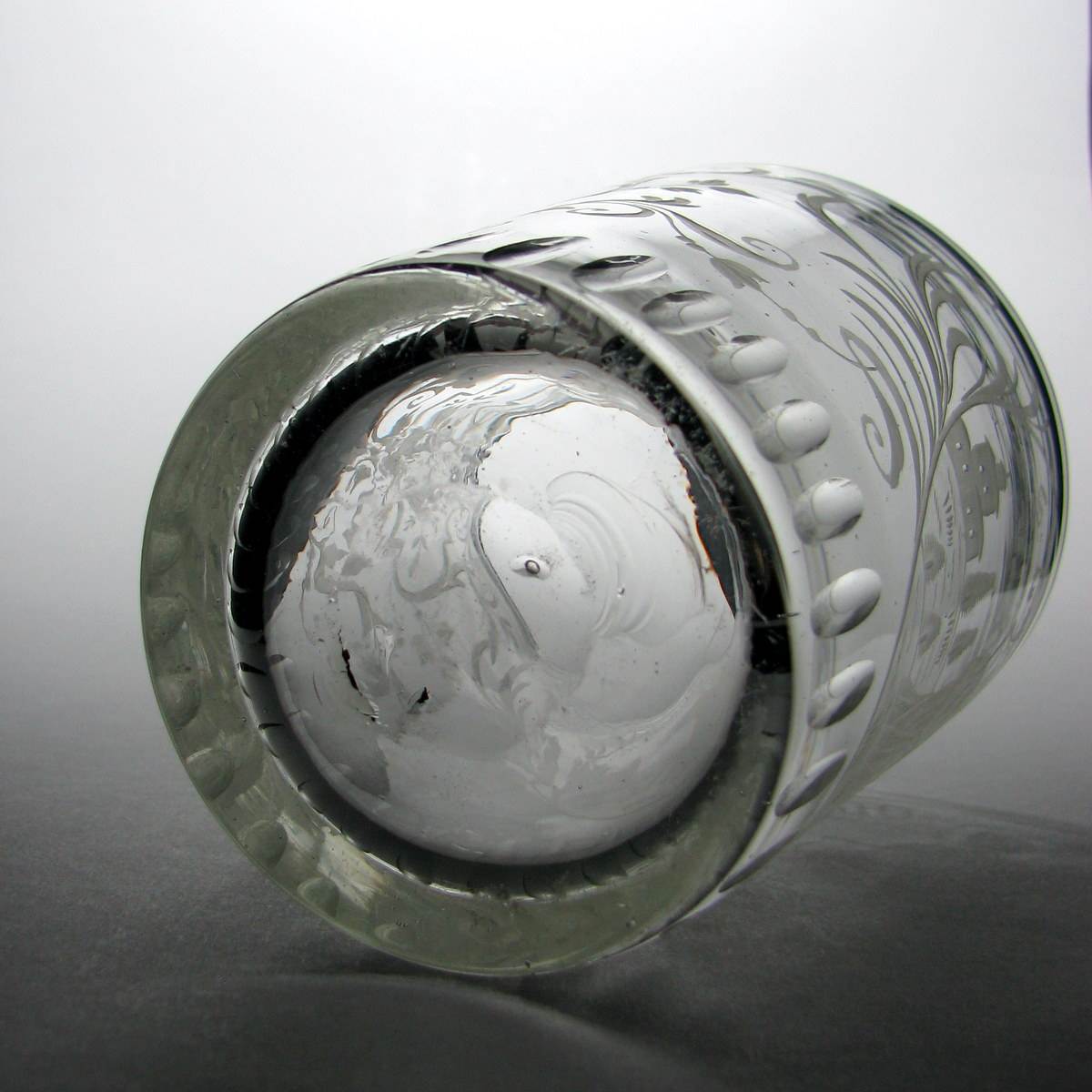
Heading : Engraved glass tumbler
Date : c1750
Period : Frederick II
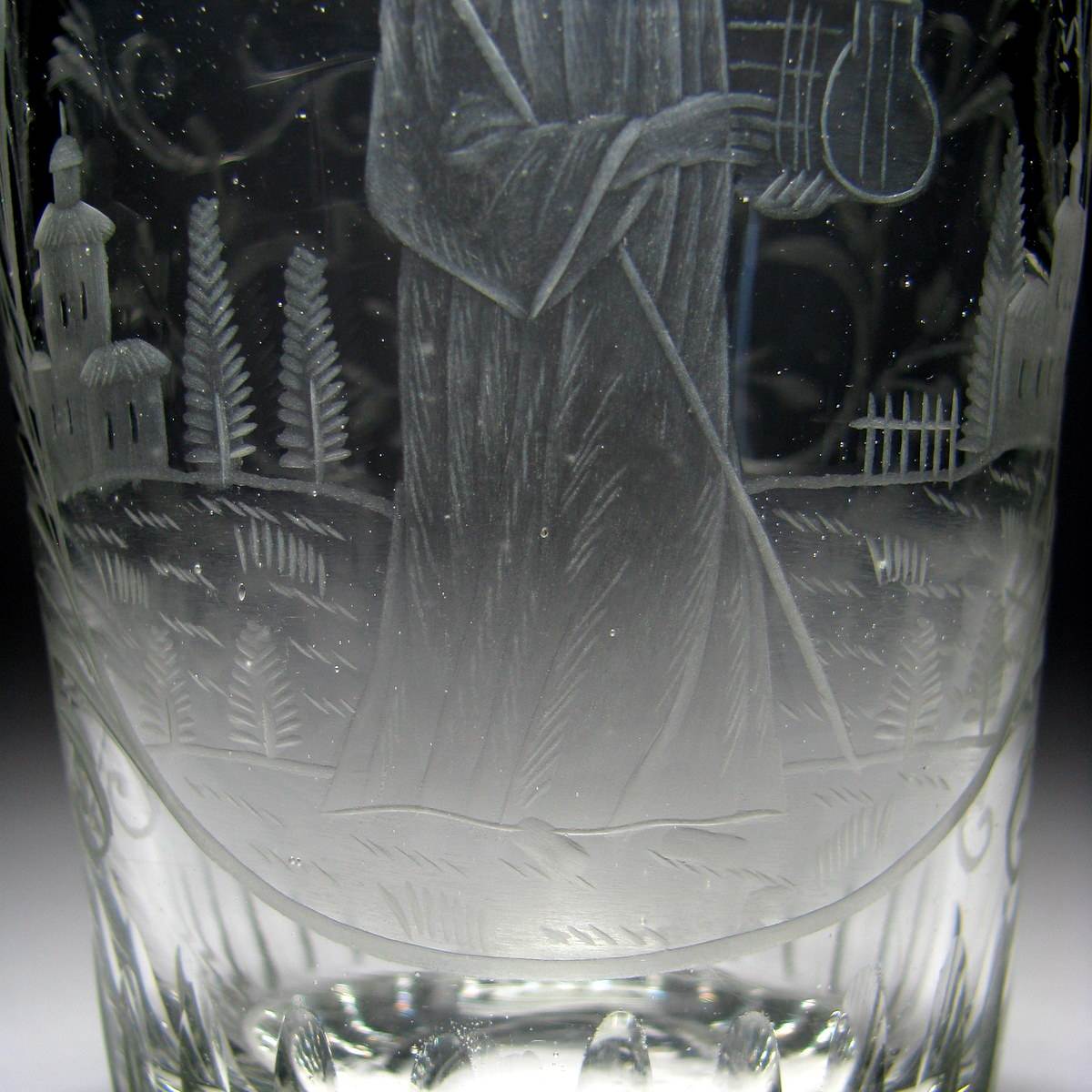
Origin : Belgium though possibly France or Germany. The landcsape is not typically Bohemian.
Colour : Clear
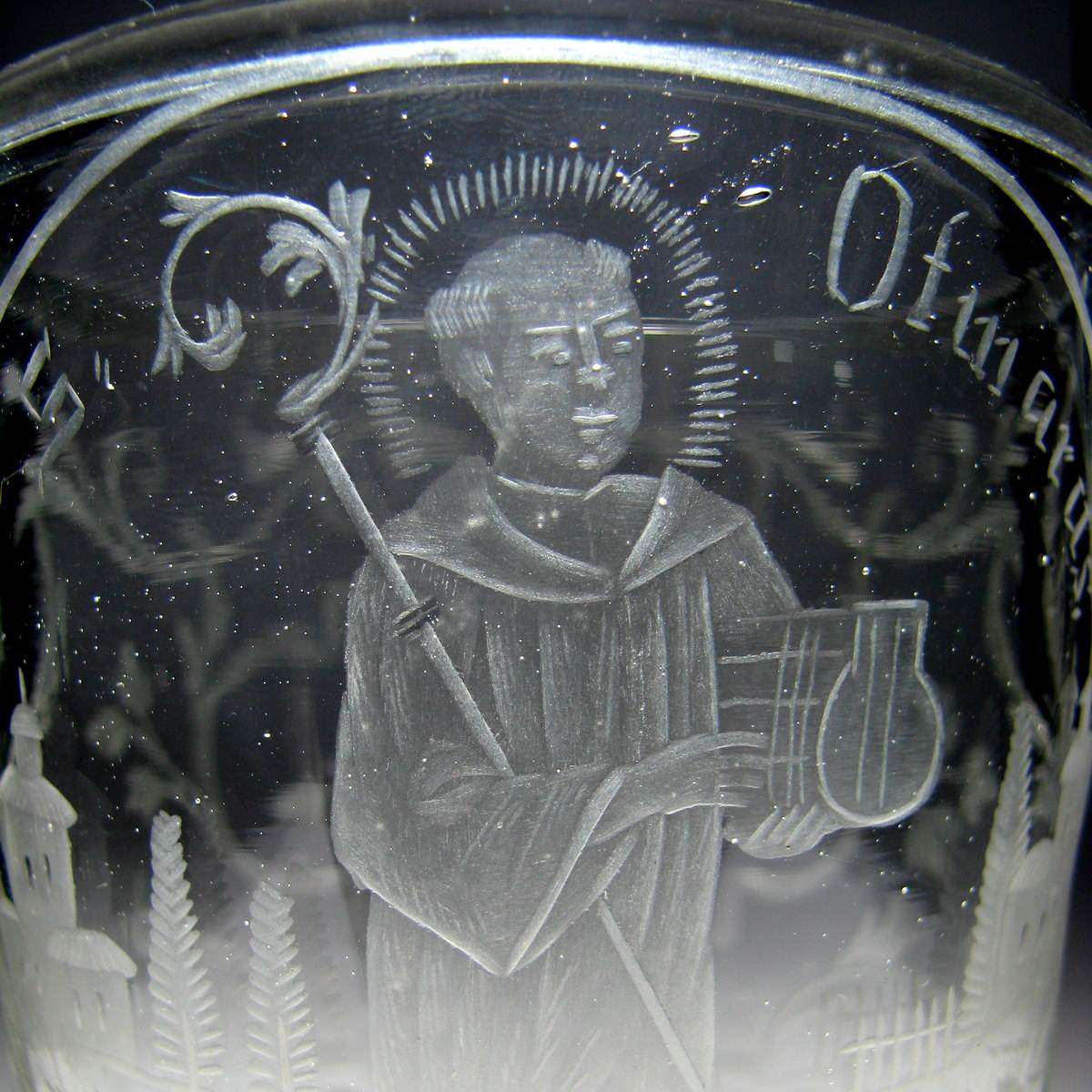
Bowl : Tappered form. Finger flute cut base. Engraved with saint ‘St Otmarus’ with rolled scriptures and crook
Pontil : Snapped
Glass Type : Soda
Size : 12cm tall with a 9.5cm bowl and 7.2cm base
Condition : Excellent. no chips or cracks
Restoration : None
Weight: 340 grams
Additional information :
St Otmarus is one of several variants of the name of a seventh century Frankish monk who is credited with being a leading figure in the introduction of Christianity to the area of France now known as the Pas de Calais. Also called Audomar or Odemaars. his name endures in its most familiar form by way of the town of Saint-Omer. some 25 miles inland from Calais itself. His cenotaph remains intact in the town’s current church (a former cathedral) which dates back to 663.
It is believed that Otmarus was Burgundian or Swiss by birth. and – along with his father – was accepted in to religious orders at the abbey of Luxeuil-les-Bains (near Mulhouse on the French/Swiss border) which had been founded by an Irish monk. Columbus (but not the more famous one who founded another monastery on Iona and preached with evangelical zeal to the Scottish Picts – our less celebrated incarnation did most of his work on the continent).
Otmarus followed in the footsteps of Columbus (the Lesser). and spread the word of Cahtolocism with such conviction around central Europe that he was appointed Bishop of Thérouanne by Frankish King Dagobert I.
It seems to be the case that Otmarus was canonized simply by way of a posthumous reward for his enthusiastic and enduring propagation of the word. rather than the act being prompted by his having been boiled alive. beaten to death by deranged children or relieved of his entrails by a slavering pack of ravenous dormice or other exaggerated demise as seems to have been the case with most early saints. His death. in or around 670. is not recorded as having been particularly grisly or sanguinary.
In addition to Saint-Omer. he is also commemorated at the Church of St Audomar at Frechen in Germany. which is adorned with a statue of him holding the bible in one hand and a large bunch of grapes in the other; unfortunately. the relevance of this vinaceous encumbrance has thus far eluded us. However grapes are blessed within the Armenian church to celebrate the assumption of the Holy Mother into heaven. There are multiple references to grapes in connection with Jesus and were used as part of thanksgiving for the harvest



Reviews
There are no reviews yet.