



Description
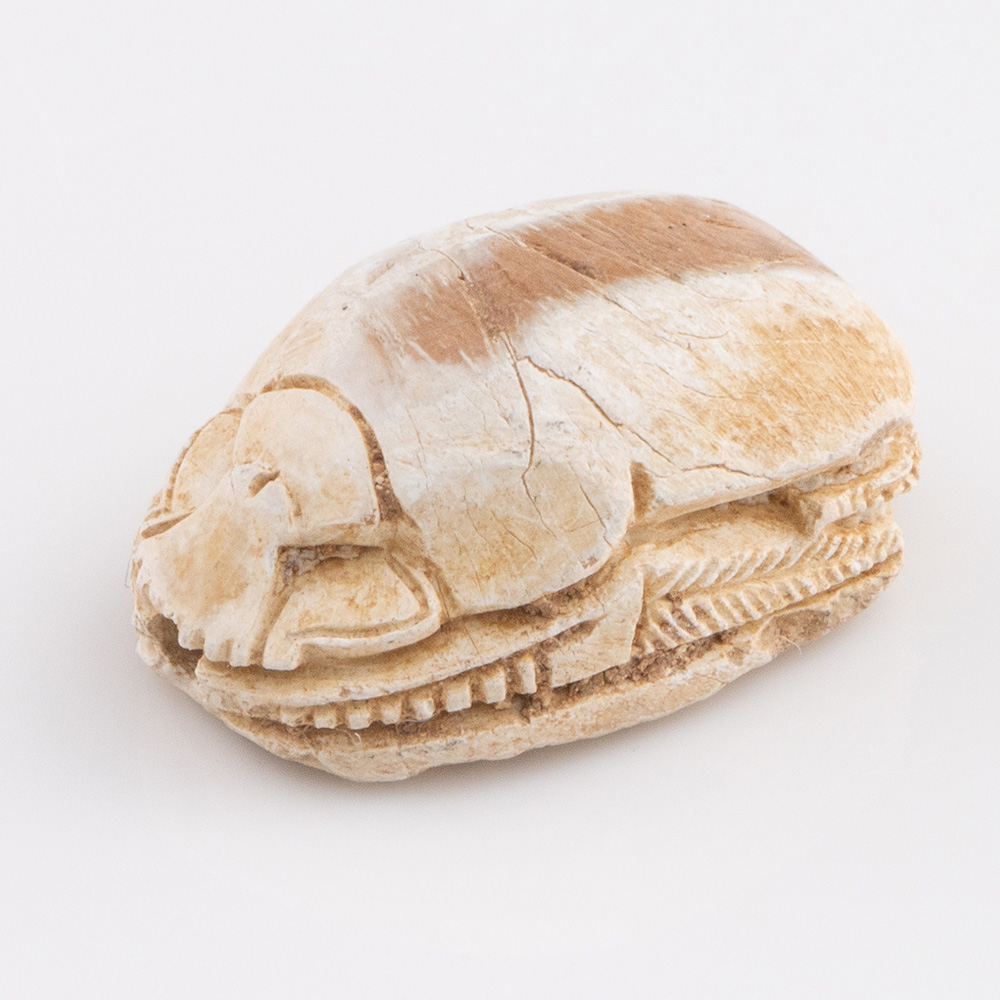
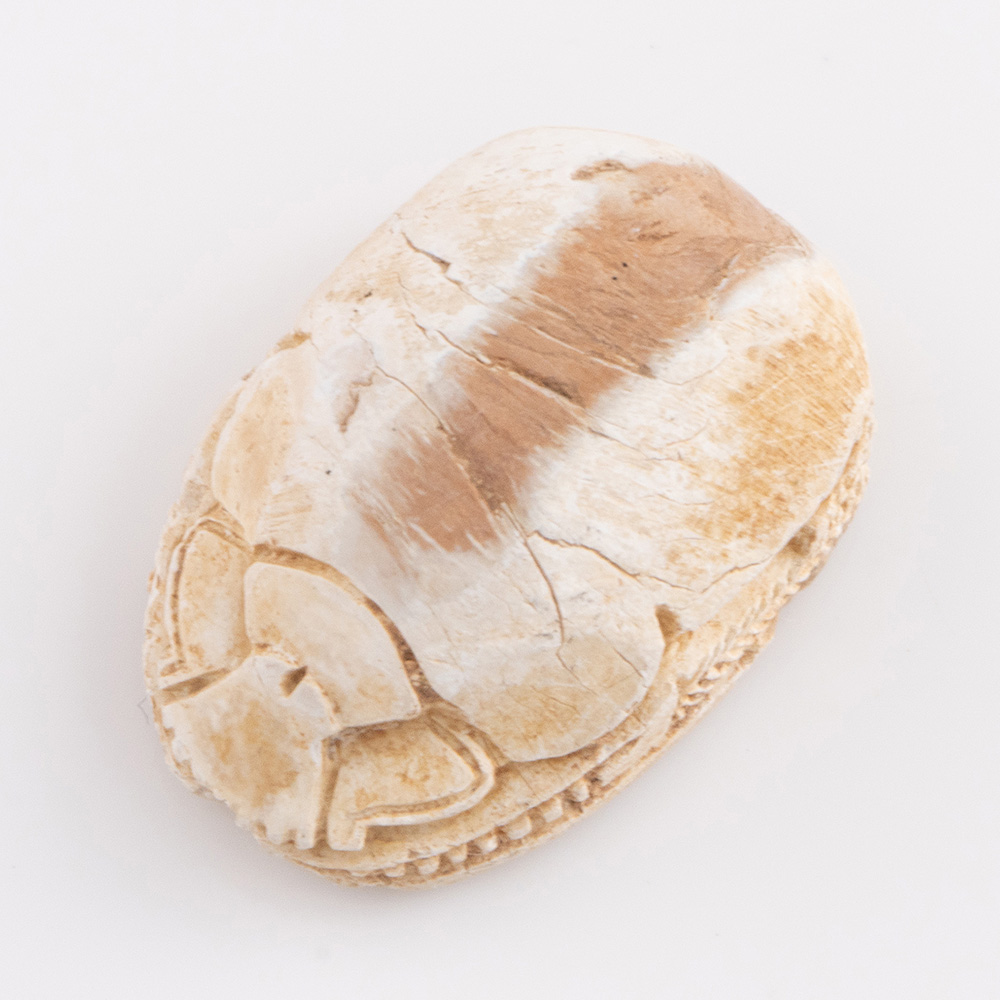
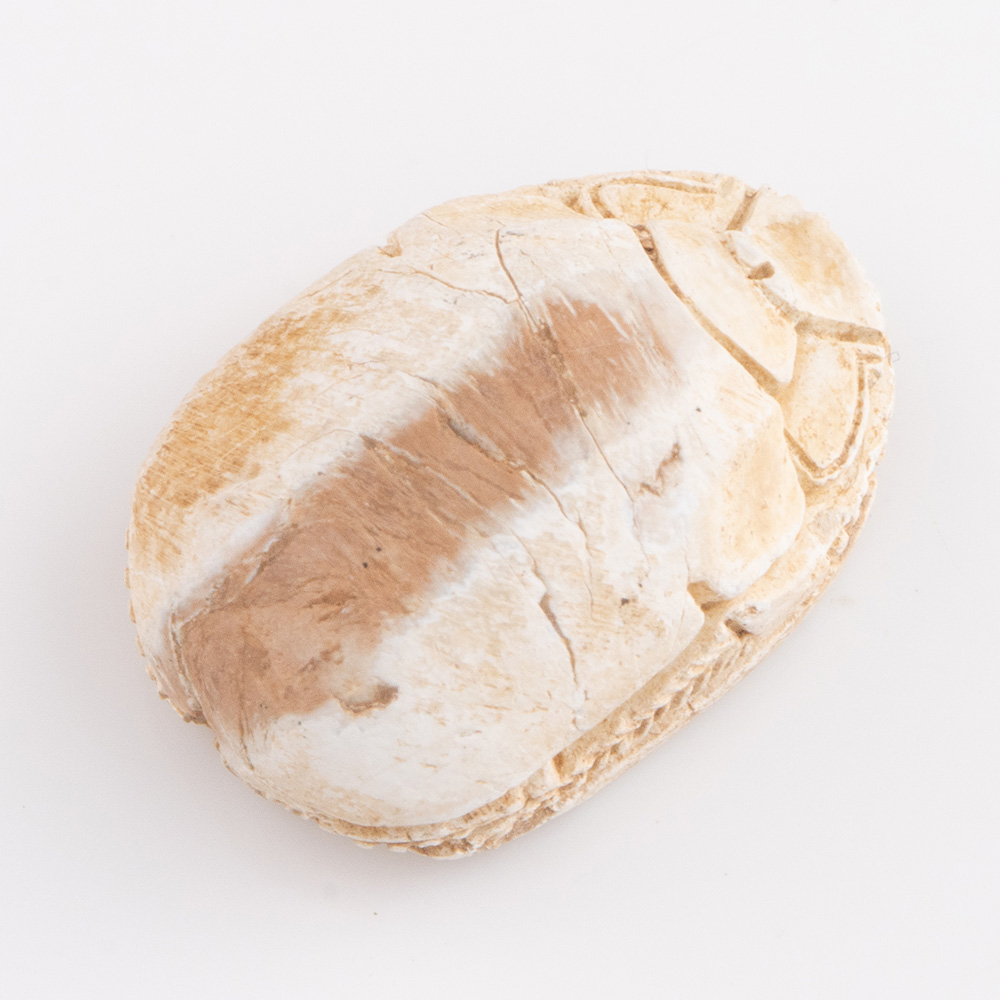
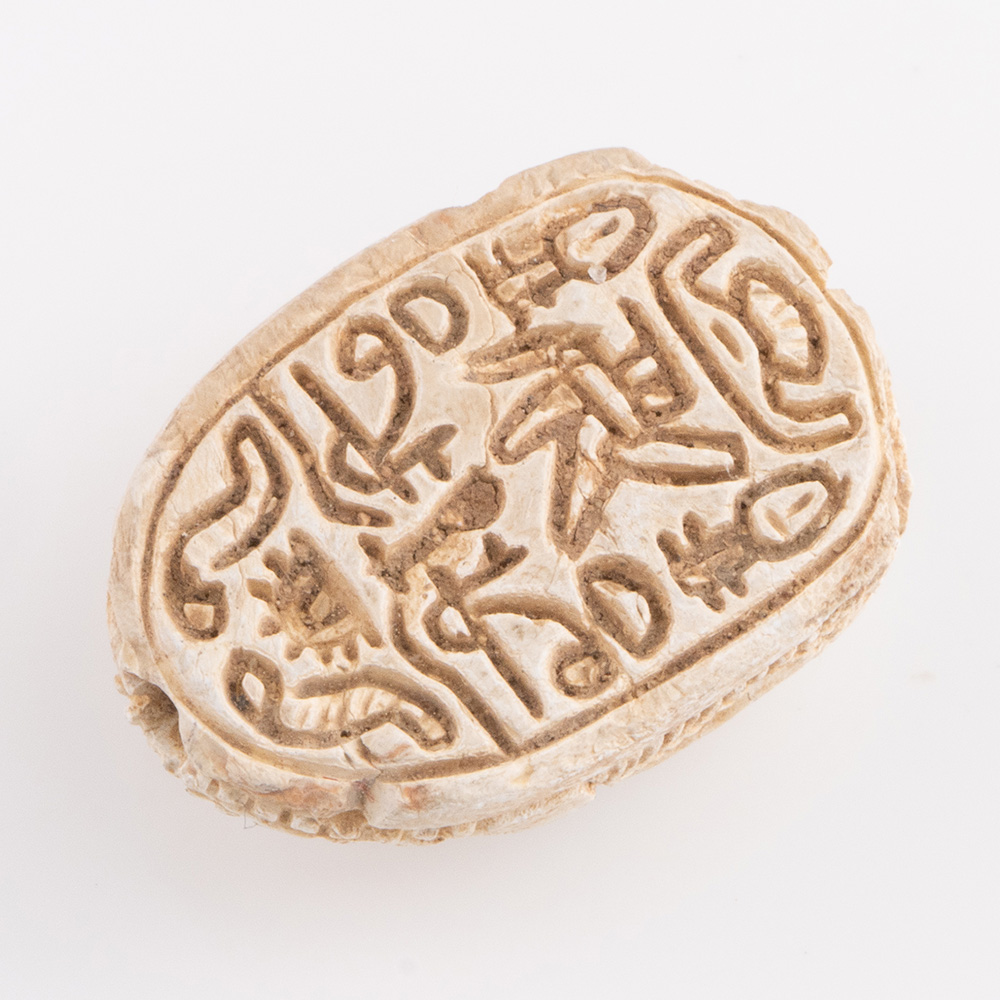
Heading : Ancient Egyptian jewellery scarab with hieroglyphics c1600bc
Material: Hand carved steatite
Period: Ancient Egypt’s Late Middle Kingdom to Second Intermediate Period. Attributed to Canaanite-Egyptian culture.
Date: 1750-1550BC
Origin: Ancient Egypt, North Africa
Condition: Very fine with good detail
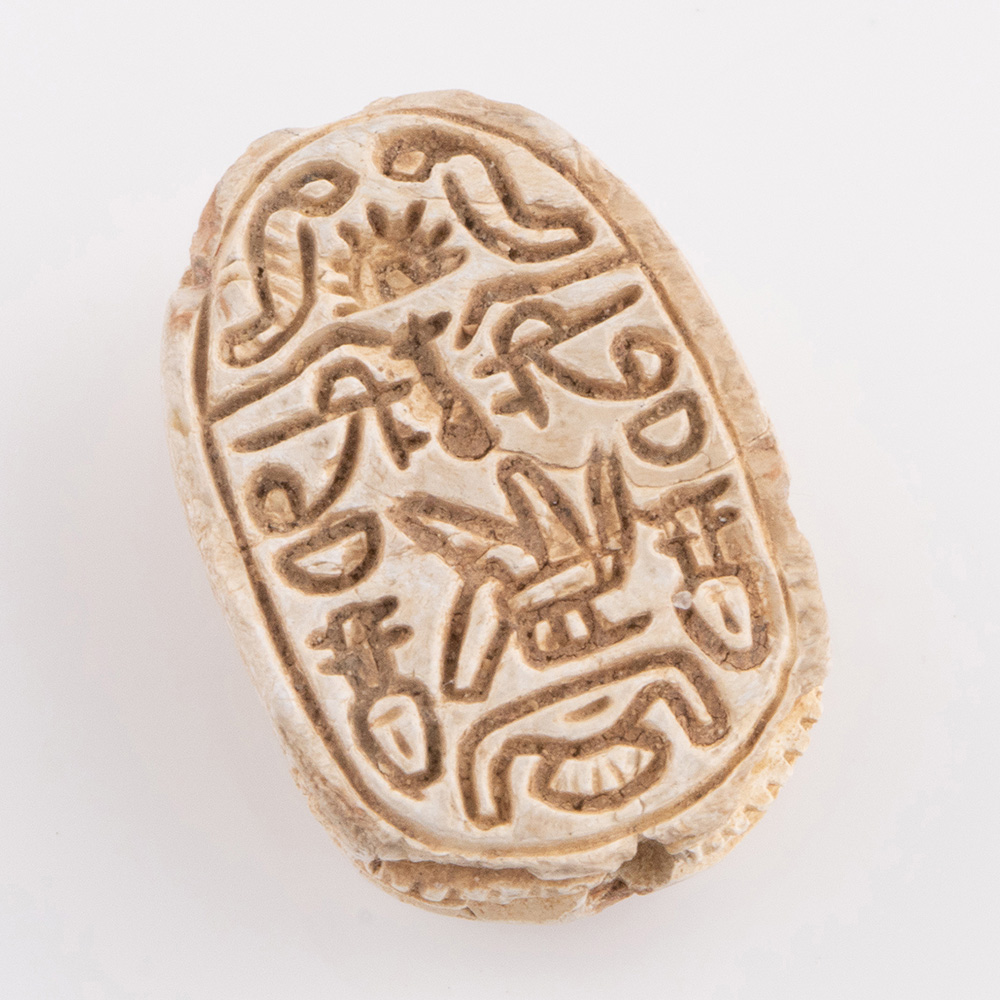
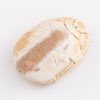
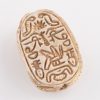
Description: The top depicts a scarab with detailed antennae and carapace. Below are carved hieroglyphics. It is pierced to allow it to be worn as a bead or amulet.
Size and Weight: 17mm x 12mm x 8mm, 1.99g
Features and Provenance: Ex Apollo Art Auctions, previously part of the Prince’s collection in Saudi Arabia, 1990-2014, then in a private collection for study at the University of Mainz, Germany.
In Ancient Egypt, as a scarab beetle rolling a ball of dung was thought to be reminiscent of the sun travelling across the sky, they were considered to be sacred and symbolic of rebirth and regeneration; the god of the rising sun, Khepri, is even depicted with a scarab as a head.
Small amulets in the shape of scarab beetles, often with hieroglyphic inscriptions, were dedicated to a deity or pharaoh, but could also have the personal family name which allowed it to be used as an impression seal. They are often found buried with a mummy to help it on its journey to the afterlife. Our example shows pseudo-hieroglyphics with udjat eyes, nefer sign and bee which are interpreted as protection and luck icons carved on its base along with other symbols of eternal decoration.
Condition Summary. This varies with the age of the artefact and there are grades between
Extremely Fine (EF). Very slight traces of wear, all parts of pattern etc present, visible and clear
Very Fine (VF). Some signs of wear on the higher parts of the relief, all parts of pattern etc present, but may be worn
Fine (F). Wear on the artefact and parts of item and pattern etc may be missing or not visible
Reviews
There are no reviews yet.