

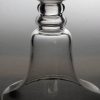
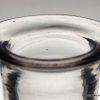
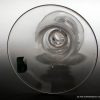


Description
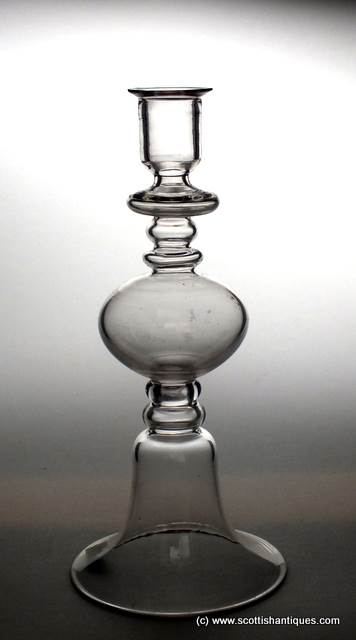
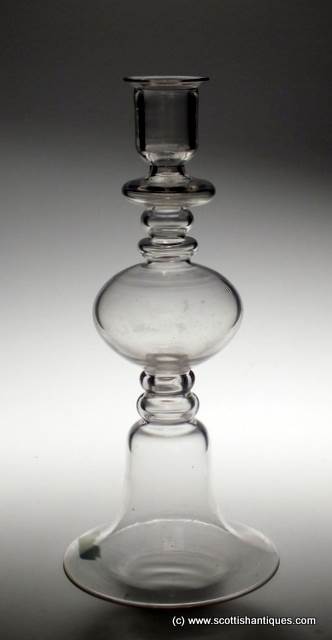
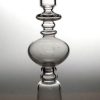
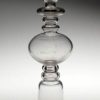
Heading : A late 17th century or18th century candlestick
Date : 1680-1780
Origin : England
Colour : Clear
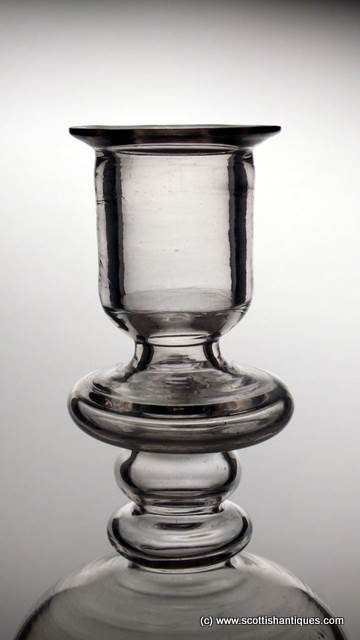
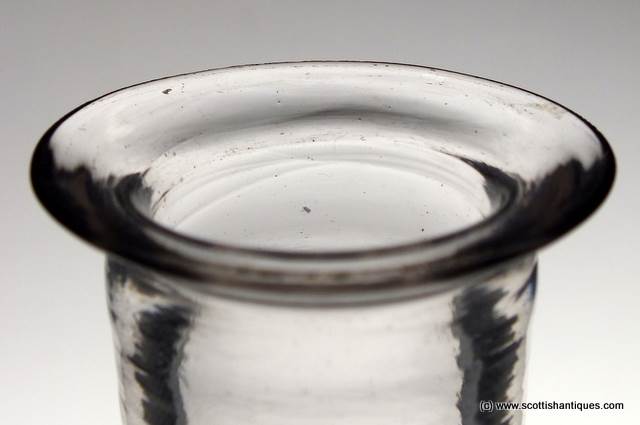
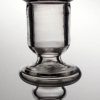
Scone : Lipped
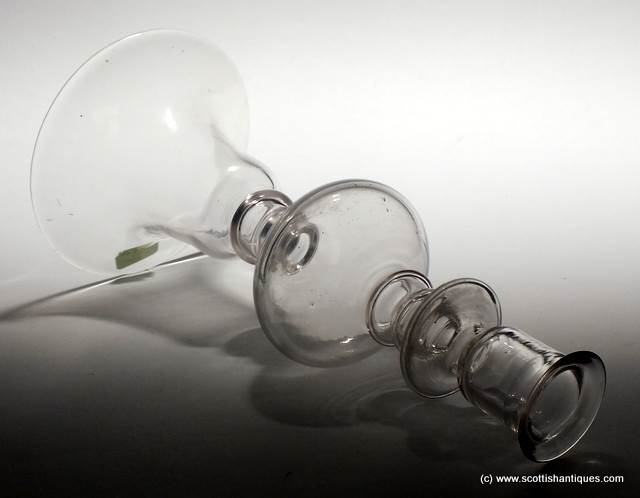
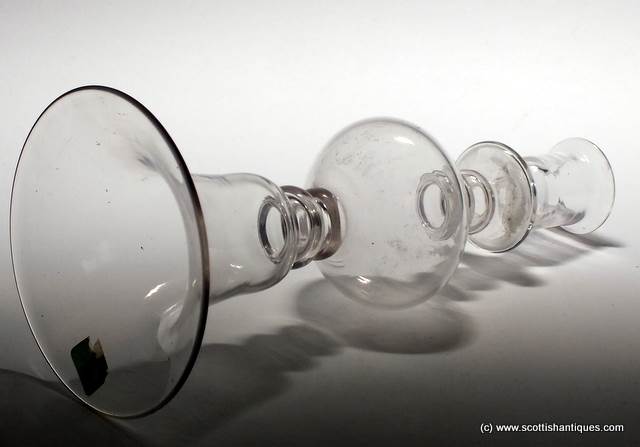
Stem : Multi knopped
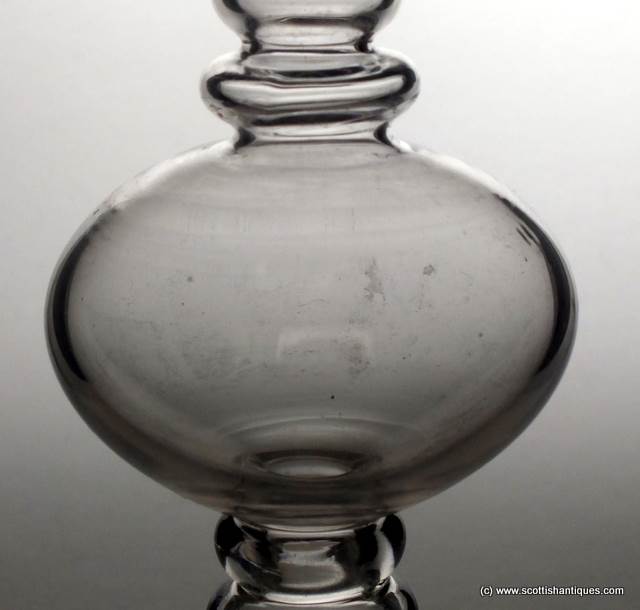
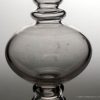
Stem Features : Multiple hollow swelling knops see below
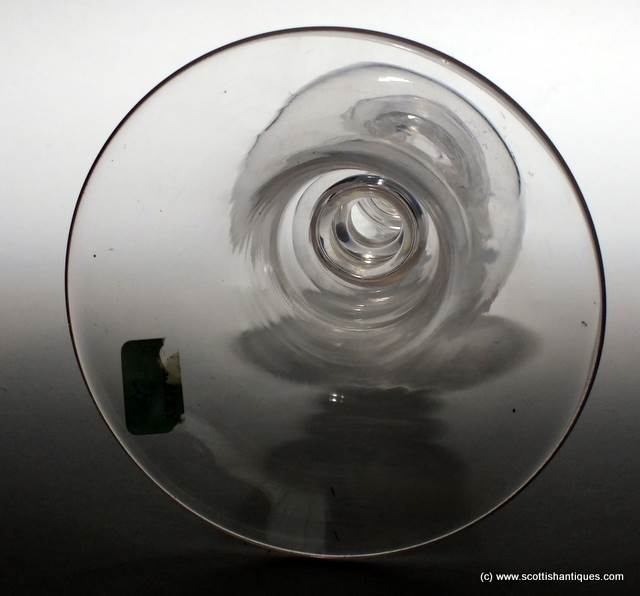
Foot : Domed
Pontil : Hollow
Glass Type : Not lead
Size : 9 1/4 inches tall with 4 inch foot
Condition : Excellent
Restoration : None
Weight: 300 grams
Candlesticks of this form are dated from the late seventeenth century to the third quarter of the18th century. The later dating given by some self proclaimed authorities has no basis in evidence.
This is in the façon venise. lightweight. thin blown. entirely hollow from foot to socket. The high trumpet shaped foot is found on copper alloy and silver candlesticks attributed to Northwest Europe from the 15th to the mid 17th century. The large ball knop on this glass example may also be found on 17th century French silver. During the late 17th century some brass examples have accentuated concave drip pans mid stem. By the early years of the 18th century the fashion had changed to solid glass candlesticks and seamed brass fabricated designs became less bulbous. Glass forms always followed those fabricated from silver and brass throughout the 18th century. the stem form and the feet on glass examples were copied from earlier popular silver styles. The only silver and brass candlesticks that share features with this glass candlestick are predominantly French and Dutch and are predominantly from the latter part of 17th century. English silver examples with high domed feet are William and Mary.
The later date attribution of this hollow glass candlestick has no basis in fact. no portraits or still life paintings whereas there are examples of hollow blown candlesticks in art from the late 17th and early 18th century. The late 18th century claim also has no basis in continuity of style. glass echoed earlier silver forms and this does follow any mid or late 18th style of silver candlestick. but it does echo the features of 17th century high footed silver candlesticks. Thus this stick resonates well with the earlier date due to both paintings and hallmarked silver examples of similar from. The later date has no basis in record such as art history and would fall outside the general stylistic development for the period. This fails the common sense test and is essentially “creationism”.
There are two further factors that contributed to a change in style away from hollow blown glass candlesticks. Firstly lead or “flint glass” lends itself better to candlesticks as it has a high refractive index and thus disperses candle light better. Secondly. the lower viscosity of lead glass does not lend itself so easily to being worked at lower temperatures and thus less intricate and more solid forms evolved. No commercial glassmaker would revert to using soda glass to make hollow blown candlesticks at a later date. For the later date to be true they must therefore be continental and the producer must also have broken the long establish pattern of glass forms being copied from popular silver forms.
During manufacture the stem was gripped and this is evidenced by tool marks above and below the ovoid knop and the annular knop above. There are pucella marks on the rim of the high domed and flared foot. The socket is lipped and again exhibits excellent tooling and has been fire polished. This is not lead glass but this provides no indication as to it’s origins. Similar forms are known to have been made in Liege. Nevers and Orléans as well as England. Good grey hue. possibly doped.
A very similar example was sold at Sotheby’s as part of the Walter Smith collection in December 1967 and was catalogued as c1685.
An example was sold as part of the Plesch collection and also dated late 17th century.
The Lear Collection of Socket Candlesticks. Christie’s. London. December 15. 1998
Literature.
See Eloy- Koldeweij- The English Candlestick 1425-1925- for multiple entries with domed bases and all before 1720.
See W A Thorpe – A History of English Glass 1929 plate L1V for an early reference.
Ex-Warner Antiques- exhibited at BADA 2015.


Reviews
There are no reviews yet.