


Description
Heading: Roman Brooch – Horse & Rider bronze with enamelling
Material: Bronze with enamelling
Period: Roman imperial
Date: 1st to 2nd century AD
Origin: Roman provinces, possibly Romano-British
Condition: Fine, with remnants of enamelling but slight loss to edges
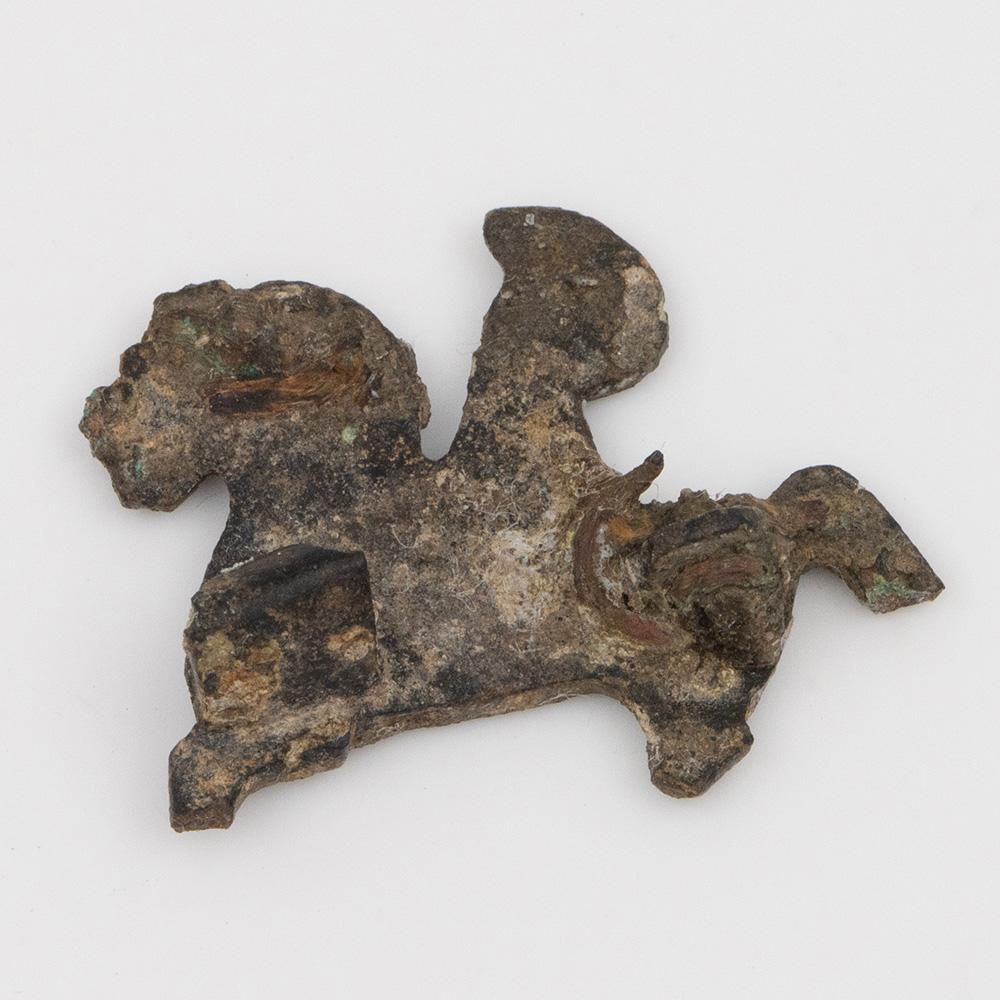
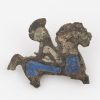
Description: A small bronze plate fibula shaped as a horse and rider, cells with remnants of white and blue enamelling, although the surface is somewhat corroded the edge detail is sharp and the rider, which could be a cavalryman with crested helmet, is well defined. As is often the case with these brooches, the pin is missing as it was probably made from iron. The catch-plate and hinge is in place but partial.
Size and Weight: 31mm x 23mm, 4.51g
References: cf. Hattatt’s ‘Ancient Brooches’ p359
Features and Provenance: Brooches as clothes fasteners have been made since the bronze age. As skills and metallurgy advanced, so did the size and detail of the fibulae. They were still used by the Romans, as buttons had yet to be invented. This type of zoomorphic brooch is thought to be derived from Celtic patterns of fibula and have been found in Britain and across Europe. The large size of the rider may indicate it is a deity rather than a man and the small delicate size of the brooch may mean it was for show rather than function.
Condition Summary. This varies with the age of the artefact and there are grades between
Extremely Fine (EF). Very slight traces of wear. all parts of pattern etc present. visible and clear
Very Fine (VF). Some signs of wear on the higher parts of the relief. all parts of pattern etc present. but may be worn
Fine (F). Wear on the artefact and parts of item and pattern etc may be missing or not visible
Reviews
There are no reviews yet.